What is unique about these teachings?
All the enlightenments - not just several
These teachings are among the few in the world that can help you attain all the enlightenments of the world's major experiential traditions. To a sufficient depth that you will no longer be a seeker.
These include the 'big four' -Buddhism, Hinduism, Christian Mysticism and Sufism - as well as independent realisers and the understanding gained by some near-death experiencers. The reason the traditions sometimes contradict each other is because few schools hold all the enlightenments. Our time is the first in history it's practically possible to receive all the teachings.
A teacher of a particular school may have a 'deeper' realisation of one or several of the facets of being than the teacher within this new wisdom school.
However the breadth of our teacher's realisation is highly unusual. He is likely one of few in the world who has experienced all the facets of being to a depth sufficient to end all further seeking.
Direct experience, not just faith or philosophy
Realisation is attained through direct, 'empirical' experience. You do not need to rely on faith or belief.
Spirituality, religion, philosophy and psychology obtain 'knowledge' in two different ways:
1. Through observation and thinking. This knowledge exists merely as\ thoughts, and is transitory.
2. Through direct experience, using the deepest faculty we have: Awareness-In-Itself. Such knowledge is as clear, simple and certain as seeing your own hand. Once you know it, you cannot unknow or forget it.
Most of the realisations of the facets of being are experiential, not conceptual.
This is why the great experiential, or 'gnostic' traditions emphasise meditational practices.
Learn directly from the realiser
Rather than waiting for a teacher travelling from overseas to deliver a short series of lectures and retreats, students in this wisdom school currently have direct access to the realiser.
Ultimate knowledge, of abiding realities, not temporary fixes
What abiding realities can we rely upon?
What is true and existent in all times and places?
What can benefit us deeply whoever, whenever and wherever we are?
There are certain quite specific aspects of Being - meaning the individual, the universe, and both as one indivisible whole - that are always present and available.
Experiencing and aligning with them leads to all the benefits associated with enlightenment throughout history.
We call them The Facets of Being.

What are the daily-life benefits of realisation?
- Even intellectual understanding brings some benefits
- Practices like meditation and mindfulness bring more.
- Transformation of beliefs, attitudes, intentions, actions and environment bring massive changes.
- Realisation and alignment with the various facets take the practitioner to an entirely different level.
Different facets bring different benefits. This list outlines the most notable.
Confidence, self-esteem, fearlessness
- 'Primordial Confidence': you’ll have confidence and self-esteem at a level so profound that it is 'unshakeable'. Paradoxically you'll also have authentic humility
- the ability to be as you are without doubt or self-blame
- you won't fear death
Clarity, flow, acumen
- greater flow and engagement
- more fun, laughter and adventure
- greater courage
- freedom from disturbing thoughts and emotions
- richer, more sensual experience: even including experiencing the senses free of thought
- a profound understanding of ‘what makes people tick’
- enhanced ability to predict the future
Bliss, pleasure, health and enjoyment
- deep relaxation
- physical feelings of bliss; joy; love; and peace (each of which is a specific experience not just an idea)
- better health and well-being
- enhanced physical pleasure and heightened senses
- reduced physical discomfort – an enhanced ability to withstand extremes of exertion, temperature, and other forms of physical contact; former feelings of discomfort will lessen or disappear
- increased flexibility and lightness of the body
- the ability to release and transcend suffering. Experiential knowledge of the principles and techniques of the paths designed to end all suffering forever should you wish to.[*]
Love, compassion, ethics and true help
- the capacity to remove all obstacles to love within yourself – as well as connection, empathy and compassion. The ability to help others do the same.
- the ability to physically feel profound love, connection, empathy and compassion
- the ability to provide truly useful help to all beings, including (ultimate) knowledge, peace, love, joy, pleasure, healing, protection and empowerment
- an ethical compass which, being rooted in abiding realities, provides unusual certainty and peace
- in summary: the capacity to identify, feel and practically enact real love, empathy and compassion for all; to love the entire universe and life itself – genuinely and deeply
Empowerment, independence & a greater ‘range of action’
- the capacity to remove internal and external obstacles: to dissolve neuroses, limiting beliefs, conditioning and limitation
- the capacity to understand and go beyond any system of knowledge or belief
- unshakeable independence from all belief systems and opinions. Irreversible immunity from the belief any being (embodied or disembodied) knows more or is more than you ultimately
- powerful immunity from non-organic mental illness
Knowledge, certainty and freedom
- Access to a bedrock of crystal-clear knowledge about what reality truly is at any moment.
The knowledge is utterly perfect, certain and clear, yet totally free of ideology and dogma.
It has the utmost simplicity, allowing you to relate to even the most complex situation as clear and obvious: the here and now becomes the only thing you really need to deal with - Certain experiential knowledge (as distinct from belief arising as thoughts) of these profound spiritual truths:
- your literal oneness and intimacy with all of existence
- your immortality
- your deep connection and inter-relationship with all beings
- and even the fact that you are a kind of all-pervading ‘god’ – as is every other being
- Profound freedom – of mind and action: since one has certain knowledge and has developed a pure intention in every moment, one is free to act spontaneously, knowing one is just as likely to achieve success as any other person and is unlikely to harm others
- The knowledge and confidence to intelligently evaluate the various paths in the world that offer the goal of a final state, without ever falling into the belief that any path is ultimately necessary or required.
Belonging, peace, joy, wonderment and contentment
- Confidence that other realms exist, and knowledge about them – including the ‘heavenly’ realms experienced by people during near-death experiences (NDEs).
- An incredible journey of the intellect: you will experience ‘crystalline palaces’ and ‘rainbow mandalas’ of knowledge, deeply stimulating, enjoyable and satisfying to the mind
- Joy and wonderment: experiencing the wonderment, beauty and divine adventure of existence
- A deep sense of belonging and intimacy with all existence – you will nestle in the bosom of the 'great mother'
- The deepest peace, satisfaction and contentment possible whilst physically embodied without taking a radical renunciate path such as that required for Nirvana, Moksha or the like
Joy ● Love ● Bliss ● Clarity ● Power ● Perfect Knowledge ● Freedom ● Pleasure ● Enjoyment ● Confidence ● Fearlessness ● Peace ● Contentment ● Wonder
How do I attain the enlightenments?
Six ways of connecting with the teachings and the teacher
A unique advantage: the powerful OAM meditation
The teacher of our school can transmit an incredibly powerful formless mediation which he has called Open Awareness Method.
This meditation is the equivalent of the paramount meditation of a number of traditions, including Dzogchen (The Great Completeness), Mahamudra (The Great Seal), and Shikantaza ('Just Sitting').
The difference is that OAM is simple to learn and do, compared with the well-intentioned but often notoriously difficult instructions of these schools.
Most importantly: it's impossible to do a meditation that more directly realises the deepest nature of being.
OAM is effectively Being meditating on Being.

Meet the teacher: This teacher-realiser
Advice on approaching a realiser
exploding counter-productive misconceptions about enlightenment
“There are more things in heaven and earth, Horatio,
Than are dreamt of in your philosophy.”
- Hamlet
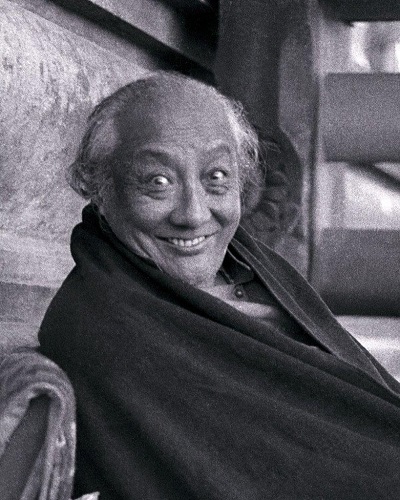
1. You are not inside the realiser's universe
Nobody can completely know the experiential-cosmos of another (while embodied).
Your teacher may look like she's just sitting there with her eyes closed, yet she may be in a vast space of bliss! Shakyamuni Buddha put it well: “it is just within this fathom-long body…that I declare that there is the cosmos, the origination of the cosmos [and] the cessation of the cosmos”
2. Your ideas about what an enlightened person is like may be wrong
People will have different ideas of 'what an enlightened person' should be like. But until you've experienced the enlightenments yourself, how can you be certain?
(Nevertheless, there are useful traditional guidelines to choosing a guide - see below)
3. Awakened Beings don't know everything - they don't have to
Meanwhile, enlightenment does not make any person suddenly know everything or be good at everything in the relative sphere. Just like anyone, they have to choose how much time and energy they will direct towards developing various conditional skills and knowledge. However they are likely to be good at achieving enlightenment and revealing ultimate knowledge!
4. Realisation is absolute but it can be endlessly deepened, so too with skills
Even here, it should be realised that different realisers will have:
- experienced different facets to different levels of depth
- different levels of skill and capacity in everything from mindfulness to manifest compassion
This is why in Zen they hope that ‘the student will stand on the shoulders of the teacher and reach higher than them’.
However if someone has experienced a particular facet, they do have the primary requirement to show you how to experience it.
5. The realiser has no obligations to you
The realiser needs nothing from you. He or she has already attained a profound sense of security and comfort in the universe, unshakable 'cosmic' self-esteem, ultimate knowledge, the capacity to enter states of bliss, profound independence of thought, and great freedom, among other things. They have no need to 'convert' others' to buttress 'faith' because their realisations derive from direct experience. The nature of reality is such that they have no obligations of any kind[1]. See also the section on teaching spirituality and money.
Implications of all this for your relationship
- It is not-aligned-with-reality to evaluate whether someone is enlightened by comparing them with your own ideas of what that should look like or how good they are at manifesting things in the conditioned sphere that you might value
- The more realistic and productive course is to evaluate whether the 'truths' the 'realiser' is positing seem realistic (and/or) then do the practices to check for yourself
- The realiser has no obligation, personal or 'cosmic', towards you
- It is up to each realiser how willing they are to dilute their hard-earned freedom in order to temporarily conform to a student's existing tendencies and ideas in order to help that student.[2].
"If you see your teacher as a dog, he's a dog. If you see him as a buddha, he's a buddha"
– Tibetan saying
You will encounter an apparently ordinary person.
But if you practice and realise yourself, your own experience will become extraordinary.
If you harbour a strong resistance to the possibility that a 'mere ordinary person' can attain the enlightenments, you only create an obstacle to your own realisation.
Zen Buddhism has a healthy attitude to this: in this tradition students seek (and eventually attain) 'kensho' or even 'satori' during every 'sesshin'.
STORY:
~* The 'unremarkable' stone-cutter who attained the 'Rainbow Body' *~
What to look for in a spiritual guide
This list derives from traditional sources and the wisdom within our school:
- Direct experiential knowledge of the facets (See how quickly they can create a fresh metaphor!)
- A pure intention: at the very least to avoid harming others, but preferably a desire to benefit them
- Ideally, deep compassion
- The capacity to enter meditative states as required
- Open-mindedness as an indicator of enlightenment
- Freedom
Questions for any teacher, with the teacher’s own answers
"No obligation, no one to save and nothing to prove"
the use of money in sharing reality-teachings
- a definitive explanation for a 'controversial' issue
Religion could be defined as a set of conceptual beliefs which if believed and acted upon, provide various benefits. Since beliefs require faith, believers may feel the need to buttress that faith by persuading others.
By contrast, spirituality could be defined as a set of experiences which give the seeker direct knowledge of the already existing deep (yet 'hidden') nature of reality. Once a person has direct experience, they have no need of faith, or to persuade others.
Religion, when believed, usually compels the believer to attain some kind of paradise and avoid postulated negative states of existence. The believer will often feel obligated to persuade others to do the same.
By contrast, deep familiarity with existing reality (which we call the facets of being) reveals that:
- even though cause and effect ('karma') means every action will result in temporary consequences, positive or negative
- still there are no forces or beings which force or obligate any being to do any thing, ever
- even though people may suffer (even greatly) by not understanding the deepest nature of reality, they are still ultimately protected and benefitted by that nature
Even though the realiser knows beings will benefit if they share what they know and will tend to suffer more if they don't, like you, they still have no obligations whatsoever.
Like you, they have infinite choices about how to spend their time and energy.
It is natural for them to want to help, but:
1. Contrary to some inspiring stories, a true realiser still requires the basic requisites of life, such as food, clothing and shelter!
and
2. They will have experienced a massive release of energy, an increase in openminded intelligence, and a resolution of existential anxieties and limitations. This enables them to enjoy life far more deeply.They would be foolish to waste the capacities they've worked so hard to attain by not giving priority to the experiences they enjoy most.
Sharing spiritual knowledge can also be arduous, especially when egoic insecurity and arrogance is present, so many realisers remain largely silent about their realisations and get on with enjoying their own (expanded) lives.
Given all the above, you can see why treating a realiser as the one person who should not be offered life-energy (including money) in return for their time, energy and resources is ridiculous.
They have no obligation to teach because there are no obligations in existence and ultimately people will be fine - suffering does not change the Facets of Being.
So it's just a fact of life that if we wish to ensure that realisers choose to spend their life-energy on sharing their realisation, we would be wise to enable, reward and encourage that sharing, especially given the expanded range of possibilities a realiser has.
Qualities of a successful student
- Sincerity, integrity, honesty with self and others, enough humility and openness to examine even cherished views
- Enthusiasm, diligence, energy
- Discernment
Explore: Before the Enlightenments
Footnotes
1. Though like anyone they are still subject to cause-and-effect whilst they abide in any form-realm. It is wiser for people to try to have a positive influence on any realm they intend to return to, but 'improvement' is an immeasurable and it's up to each person how much they feel it's worthwhile or necessary to take on. [Back]
2. A realiser who remains a monk may have far greater willingness to do this than a so-called 'crazy-wisdom yogi' or 'avadhoot'. This is one reason some enlightened people prefer to remain 'hidden yogis' rather than teach, even resisting the demands of very senior spiritual leaders who would have them perform the role of 'spiritual master'. See for example this story. [Back]